

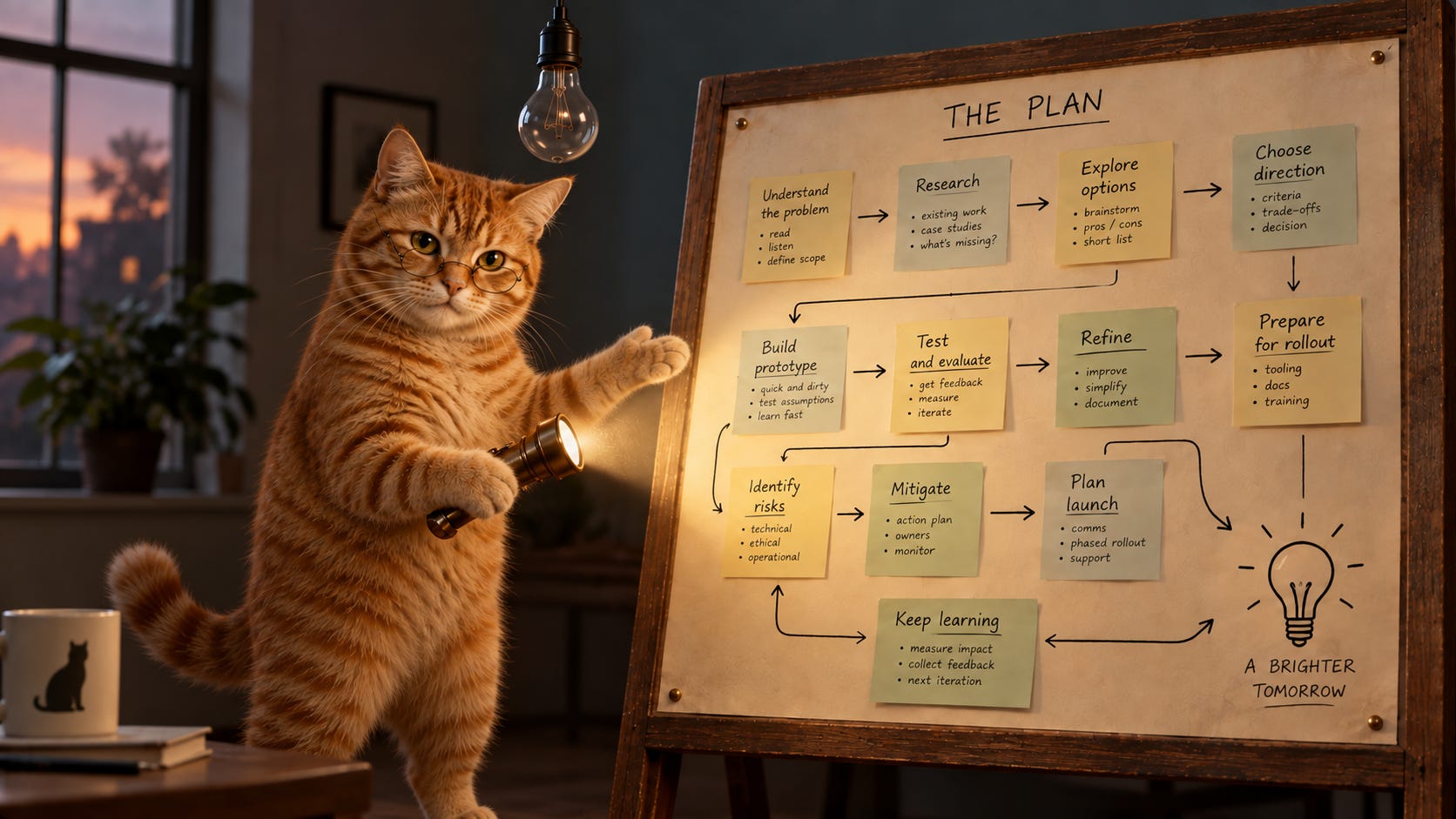
You’d think just one. But as with most things in digital, the answer is never as simple as it seems.
Let’s break this down. The client has asked for the lightbulb to be changed. Assemble people. Can we get something out today? Is the lightbulb in scope for this sprint? Who owns the socket? Does it need to go through design? Has someone raised a support ticket, or are we just talking about changing it?
The client believes it’s a simple request, but I’m just not sure they’re seeing the whole picture here.
The front-end dev opens the office spec spreadsheet to check if light fittings are part of their remit. The back-end dev mutters something about the cabling being legacy. DevOps says they’ll need to install a new fitting - but only once someone’s completed the correct change request and confirmed the fuseboard can take it.
The accessibility lead gently reminds everyone that we shouldn’t rely on light as the only means of conveying information. They’re absolutely right. But now someone’s suggesting haptics. Or maybe a floor buzzer.
Slow it down guys, act cool, the stakeholders are coming in and we don’t want to get them over-excited.
The Product Owner asks if there’s any user research proving people actually need light. The developers roll their eyes. Security insists we conduct a risk assessment before touching anything electrical and starts quoting regulations that’s got everyone confused. Marketing wants to make sure the light reflects the brand tone - “Can we take another look at that shade of white?”. Legal’s unsure we can even call it a “bulb” until someone checks the trademark register. Compliance suggests we really ought to be switching to LED bulbs to meet the latest eco guidelines.
We haven’t changed the bulb yet, but the Miro board is looking fantastic.
At this point, someone whispers, “We really should workshop this properly”
Everyone takes a breather and steps out for lunch.
The afternoon session starts with a bang. A couple of the leads stayed back during lunch break to get some stuff down in a living document. A new initiative launches to standardise lighting across the building. They call it ‘Lightbulb-as-a-Service’. There’s talk of a shared lighting platform, a centralised switchboard, and someone starts sketching wireframes. A logo is designed. There’s a roadmap.
The bulb change is re-scoped as Phase 2.
Design wants to standardise bulb shapes across all rooms. Compliance reminds them it must be LED. There’s concern about “bulb inconsistency”, and a Slack channel called #light-strategy quietly springs to life.
QA gets involved. The developers roll their eyes again.
They calmly explain that we’ll need a test plan. A matrix is created covering dim, bright, flickering, and strobe. Someone raises a support ticket for strange shadows in certain corners. Another flags that the light appears to “jump” when the door opens too quickly.
The team agrees the bulbs must be accessible. Suggestions include an audible chime when the light turn on, textured labels for the switches, and a small sign explaining what the lights are for.
The plan is presented to the stakeholders. They nod and listen to the presentation and seem to enjoy the brand video. They’re excited, they congratulate the team, but they point out the room is still dark and ask for the plan to be stripped back. Maybe just make the bulb a little bigger.
It’s getting late and we need to keep the energy up, but the team are disheartened by the stakeholder meeting. The boss orders pizza from the new place on the high street. The devs want a Mighty Meaty, the designers want a spicy vegetarian and we’d better get a plant-based cheese for the strategist or whoever else wants it (nobody).
Ok. It’s time to take this back to basics. Let’s just get this one done and if we do a good job then maybe we can get a phase 2 out of it. Order the bulb.
Turns out the existing bulb was installed ten years ago. No one ever replaced it - or questioned whether it still worked.
Procurement is looped in and we’re told we can’t just buy a new bulb - it has to be sourced through the approved supplier. But the supplier doesn’t stock that model anymore. Finance raises a purchase order for the newer model. Legal needs to review the warranty and the energy performance certificate. It could turn into a late one. Someone suggests picking one up from B&Q - they’re open late on a Thursday - but no one’s sure if that’s allowed under the current procurement framework.
It’s 10pm. Someone from Facilities walks in.
“I’ve changed the bulb,” they say.
The room goes quiet.
Someone quietly says, “We probably could’ve just changed it this morning.”
“But hey, at least we’ve got a roadmap for next time.”
Written by Stu Collett – web veteran & recovering perfectionist.
Enjoying The Byte Stuff? You can subscribe for free to get future posts by email – no spam, no pressure, just occasional digital reflections.
How many? As a software engineer I say, "none, it's a hardware problem"